
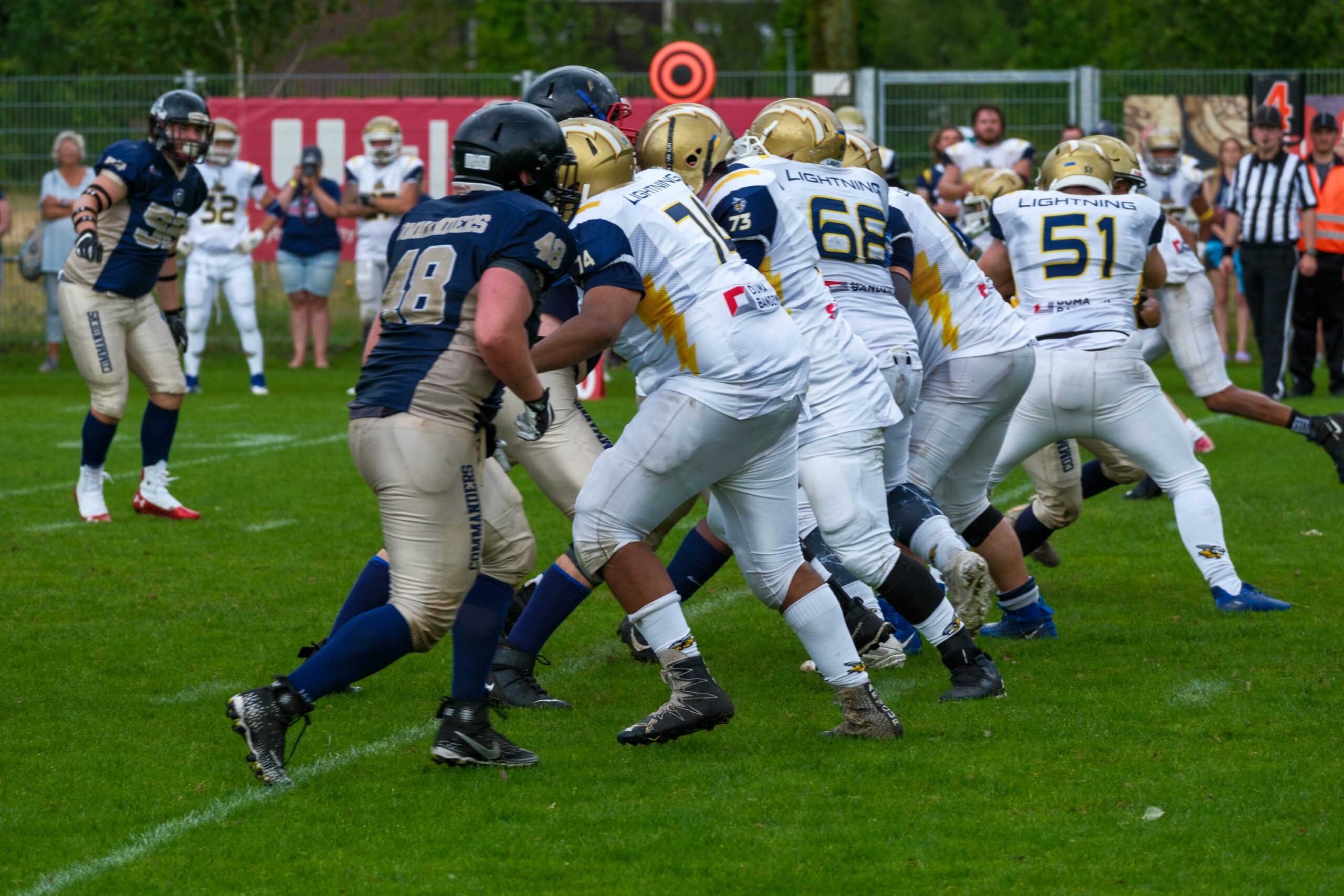
In football recruiting, ATH usually stands for “athlete.” It describes a player whose skills may translate to more than one position, rather than a fixed position such as quarterback, cornerback, or running back. The label helps coaches track versatile prospects while they decide where that player can contribute most effectively.
What Does ATH Mean in Football?
ATH is a recruiting abbreviation for athlete. It is commonly used in prospect databases, recruiting profiles, roster listings, and recruiting coverage when a player is not yet assigned to one specific position. A high-school athlete may have experience at wide receiver, running back, defensive back, quarterback, linebacker, or special teams, and the college staff may still be deciding where the combination of size, speed, instincts, and technique will be most useful.
The label does not mean the player is a separate position with its own set of rules. It is a shorthand for versatility or a recruiting projection. An ATH recruit might ultimately play offense, defense, or a role that changes depending on the team’s scheme. The abbreviation also does not automatically tell you whether the player is elite, a starter, a backup, or a developmental prospect.
You may see ATH alongside other recruiting labels such as QB, RB, WR, TE, OL, DL, LB, CB, S, and K. Those labels usually indicate a primary role or projected position. ATH signals that evaluators are keeping more than one pathway open. It is best read as “position still to be determined” or “multiple-position potential,” not as a guarantee that the athlete will play both sides of the ball in college.
Why Recruiting Services Use the ATH Label
High-school football players often play several positions because a team may have limited roster depth, a coach may want its best athlete on the field, or the player may have developed more than one skill set. A quarterback in high school might also be a dangerous runner and defensive back. A running back might have the hands and route awareness to line up at receiver. A tall, fast defensive prospect might be recruited as a linebacker, safety, or hybrid defender.
Recruiting services need a way to describe prospects before every college has made a final projection. ATH gives a profile room to remain flexible. It can also reflect different opinions among coaches: one school may view the prospect as a slot receiver, another as a safety, and another as a return specialist. The final decision may depend on the team’s depth chart, scheme, available scholarships, and how the player develops physically.
The term can also appear in a video-game roster or fantasy discussion, where its meaning may be adapted by the platform. In a recruiting context, however, the core idea remains a versatile player whose best position is not settled. If you see ATH on a roster website, check whether the site is showing a recruiting projection, current team assignment, or in-game position category.
Which Positions Can an ATH Recruit Play?
Wide receiver
A versatile athlete with acceleration, body control, route awareness, and reliable hands may project to wide receiver. A player who already caught passes in high school may move inside to slot receiver, where quickness, space awareness, and the ability to separate over short distances are valuable. A bigger prospect may be considered for an outside receiver role if he can win contested catches and handle physical coverage.
Running back
An ATH prospect who has vision, balance, burst, ball security, and the ability to make a defender miss can be developed at running back. Coaches may also evaluate whether the player can protect the quarterback and catch passes from the backfield. A player who is an effective runner in high school is not automatically suited to college running back; the speed of reads, strength of defenders, pass-protection responsibilities, and workload can change the projection.
Defensive back
Speed, change of direction, awareness, anticipation, and tackling technique can make a two-way high-school athlete attractive as a cornerback or safety. A former receiver may understand route combinations and how to attack a defensive back’s leverage. A defensive projection still requires learning coverage rules, communication, eye discipline, and run support. Coaches will study film to see whether athletic ability translates into consistent defensive decisions.
Quarterback or a hybrid offensive role
Some ATH prospects have played quarterback and may continue at the position if their throwing mechanics, accuracy, decision-making, and processing develop. Others are projected to receiver or running back because their running ability is more advanced than their passing skill. A team may also use a versatile player in motion, option packages, direct snaps, or other designed roles, depending on his strengths and the offensive system.
Linebacker, safety, or a hybrid defender
A larger athlete with speed and tackling ability might be considered for linebacker or a hybrid safety-linebacker position. Defensive coordinators may want a player who can cover a tight end or running back, pressure the quarterback, and still support the run. These roles are scheme-dependent. A player’s height and weight are only part of the picture; leverage, instincts, lateral movement, and the ability to diagnose plays matter just as much.
Special teams and return duties
A versatile player may also contribute as a kick returner, punt returner, gunner, or coverage specialist. Open-field acceleration, ball tracking, decision-making, and confidence under pressure can make special teams a realistic early pathway to playing time. Special teams should not be treated as a fallback role without value: strong coverage and return play can influence field position and create opportunities for the wider team.
How Coaches Decide Where an ATH Should Play
Coaches start by evaluating traits, not just the label. They look at height, weight, frame, speed, acceleration, strength, agility, coordination, and how the player performs against strong competition. Measurements can help, but they should not replace game film. A prospect who looks quick in a timed drill may have difficulty changing direction in traffic, and a player with ordinary measurements may have excellent instincts and technique.
Film review reveals how a player reads the game. Coaches want to see whether the athlete recognises blocking schemes, tracks the ball, adjusts to defenders, changes pace, and makes decisions under pressure. They look for repeatable skill, not only highlights. A long run may be exciting, but the staff also studies the play before the run, the player’s footwork, vision, protection, and response when the first option is taken away.
The team’s system has a major effect. A spread offense may value a receiver who can work in space, while a power system may want a heavier player who can break tackles. A defense that relies on press coverage may need a different cornerback profile from a system that uses zone concepts. An ATH prospect may be a better fit for one coach’s plan than another’s, even if the two schools rate the player’s overall talent similarly.
Roster depth also matters. If a college already has several established running backs but needs defensive backs, the staff may recruit an athlete with a defensive projection. Another programme may have a different need. Recruiting is therefore a combination of player development and team planning. The position listed on a public profile may change after a visit, a camp evaluation, a commitment, or the first season of college practice.
ATH Does Not Mean a Five-Star Recruit
A common misconception is that ATH automatically describes a high-ranking or unusually talented recruit. It does not. Recruiting stars and position labels answer different questions. A star rating is a service’s evaluation of the prospect relative to its ranking system, while ATH is a position or projection category. A lower-rated athlete may still be recruited as an ATH, and a highly ranked player may have a clear single-position label.
Recruiting rankings are subjective evaluations, not official guarantees of future performance. They can change as players grow, attend camps, compete against stronger opponents, and receive updated scouting. When comparing athletes, look beyond the headline rating. Study competition level, consistency, injury history, technical skills, physical development, academic eligibility, and the roles offered by interested programmes.
How to Read an ATH Recruiting Profile
Start with the class year and the player’s school. Confirm whether the listed position is current or a recruiting-service projection. Look at height and weight but remember that high-school measurements can be outdated or taken under different conditions. Check the player’s full game film rather than a short highlight reel. Look for the quality of opposition and whether the same strengths appear across multiple games.
Read the comments from coaching staffs carefully. If a college describes the player as a receiver, it may be recruiting him for that role even if a recruiting site still lists ATH. If the coach talks about defensive versatility, that may signal a different path. A verbal commitment is not the same as a final depth-chart position, and a player may change roles after arriving on campus.
Compare the athlete’s strengths with the demands of the possible positions. For a receiver, check route running, releases, hands, and awareness. For a defensive back, watch coverage technique, footwork, ball skills, and tackling angles. For running back, study vision, ball security, contact balance, and pass protection. For quarterback, evaluate accuracy, mechanics, processing, and decision-making. Position-specific film makes a broad ATH label more informative.
Examples of ATH Player Development
Imagine a high-school player who starts at quarterback, plays safety on defense, and returns kicks. One college may believe the player’s arm talent is not yet at the level needed for its quarterback room but sees an opportunity at receiver or safety. Another school may offer a chance to compete at quarterback while using the player in designed running packages. Both evaluations can be reasonable because each programme values a different combination of traits and needs.
Consider a 6-foot-2 athlete who plays receiver and outside linebacker. If he gains strength and learns coverage concepts, he could develop into a hybrid defender. If he improves route precision, releases, and contested catches, he may remain on offense. The staff can reassess after strength training and practice. The athlete should ask the coach how the programme plans to teach the position and what performance benchmarks will be used.
A third example is a smaller, explosive player who plays running back and cornerback. The athlete may be valuable on special teams while learning a primary college position. The decision can be influenced by durability, contact balance, tackling fundamentals, ability to read route combinations, and the team’s depth. Versatility creates options, but it does not mean a player has to master every role at once.
Questions Families and Players Can Ask Coaches
- What is the primary position you are recruiting me to play?
- Is the ATH label temporary, or does the programme expect a multi-role player?
- Which traits do you see as the strongest fit for this scheme?
- What technical skills should I develop before arriving on campus?
- Will the player have a chance to compete at more than one position?
- How does the team’s current depth chart affect the projection?
- What is the likely special-teams role during the first season?
Families should look for a clear explanation rather than a promise that the athlete will play every position. Ask what the coaching staff expects and how it will communicate if the projection changes. A good fit considers the player’s skills, development, academic goals, and realistic opportunities. The most attractive position on paper may not be the one that creates the best long-term pathway.
Position labels become more useful when they are connected to the demands of real college roles. NCSA’s football recruiting guidelines compare the skills coaches look for at different positions, which reinforces why film and role-specific technique matter more than a broad label alone. Readers can also explore Worthiums profiles of NFL wide receiver Calvin Johnson and football broadcaster Mina Kimes for related sports-career context.
Conclusion
ATH in football generally means athlete, a recruiting label for a versatile prospect who may fit several positions. It is not a formal position, star rating, or guarantee of playing time. To understand what a particular ATH recruit can become, review full-game film, physical traits, technique, coach comments, scheme fit, and roster needs. The best projection is the one supported by evidence and a clear development plan.

Lois Snyder is a versatile writer with experience across multiple domains. She crafts engaging and informative content, delivering valuable insights and captivating readers with her expertise and passion for diverse topics.