
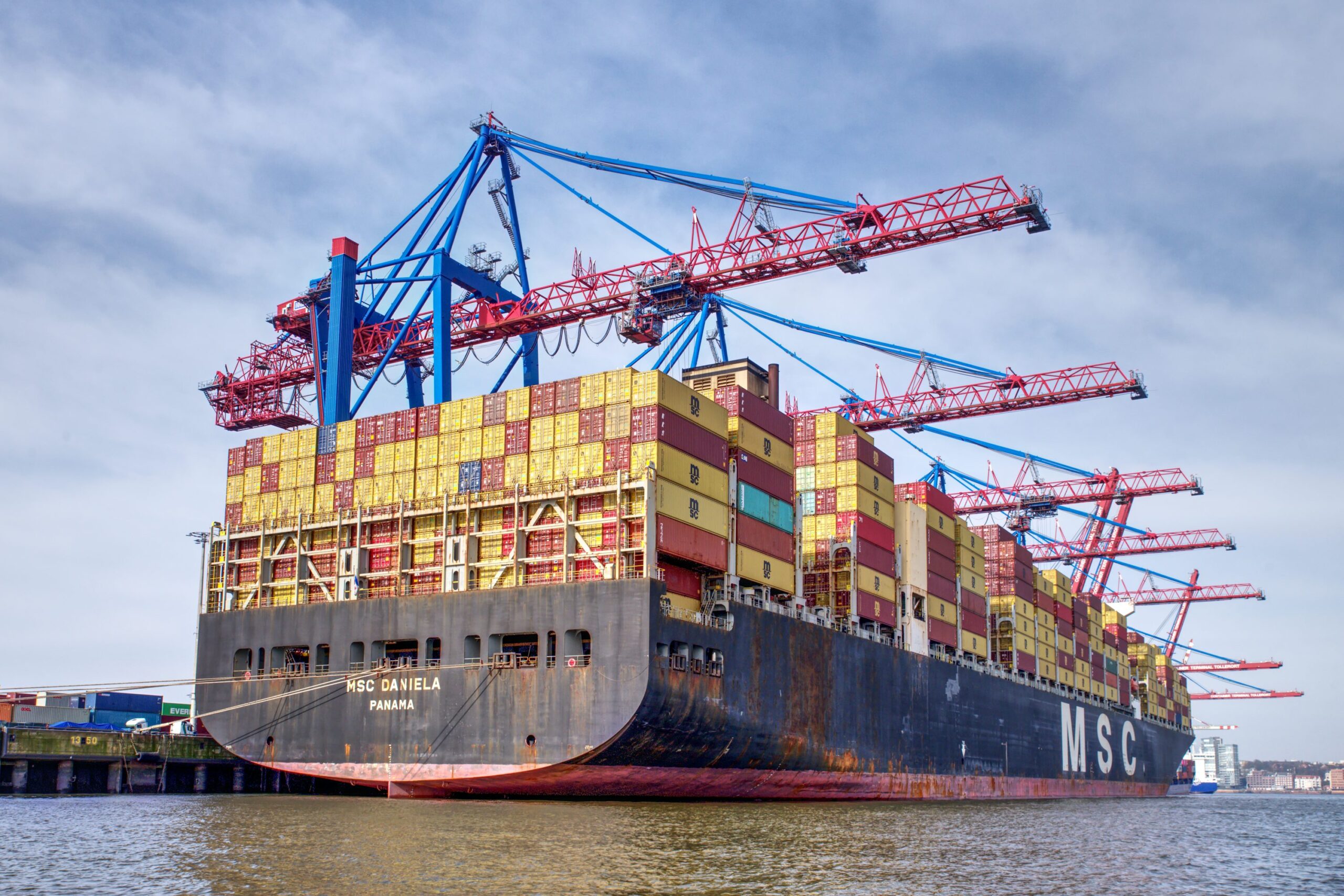
Moving bulk cargo from Turkey to Italy requires more than a low freight rate. The commodity, tonnage, loading equipment, ports, transport mode, customs status, insurance, and delivery terms all affect the plan. A specialist freight forwarder can coordinate the chain, but the shipper must provide accurate cargo details and confirm who carries each cost and risk.
What Does Bulk Cargo Mean?
Bulk cargo is material shipped in large quantities without individual retail packaging. Dry bulk may include grain, fertiliser, minerals, cement, salt, or similar loose commodities. Liquid bulk can include oils and chemicals carried in dedicated tanks. Breakbulk or general cargo is different: goods are shipped as individual pieces, bundles, pallets, big bags, or units that are loaded separately rather than poured or pumped in bulk.
The distinction matters because each cargo type needs different handling, equipment, storage, documentation, and safety controls. A shipment of loose grain may require a dry-bulk vessel, clean holds, loading conveyors, and attention to moisture and contamination. Steel coils, timber, machinery, or palletised bags may require breakbulk or container handling. A liquid product may need a tank container or a vessel with suitable tanks and compatible cleaning standards.
When you contact freight forwarders for Turkey–Italy bulk cargo, state clearly whether the goods are loose dry bulk, liquid bulk, breakbulk, or containerised. A general request saying “bulk shipment” is not enough for an accurate quotation. Include the commodity name, cargo code if known, quantity, packaging, density, dimensions, and any hazard classification or handling restrictions.
Choosing a Transport Mode Between Turkey and Italy
The route may use road freight, short-sea shipping, deep-sea services, or a multimodal combination. Road transport can be attractive for door-to-door cargo that fits standard trailers and does not require specialised bulk-vessel handling. It offers flexibility for collection points and final delivery, but cost and transit depend on distance, border procedures, driver availability, vehicle type, and the cargo’s weight or dimensions.
Sea freight may be more suitable for larger tonnages or cargo that can be loaded at a port with the required facilities. A shipment may move from a Turkish port to an Italian port and then continue by road or rail to the receiver. The forwarder should confirm whether the commodity can be handled at both ends, whether a suitable vessel is available, and whether the shipment needs a direct service or transhipment.
Short-sea and feeder services can connect regional ports, but service frequency, vessel capacity, and terminal equipment vary. Ask for the named ports, planned vessel or sailing window, cut-off times, expected transhipment if any, and the party responsible for port handling. A schedule estimate is not a guarantee; port congestion, weather, vessel changes, customs examination, and operational disruption can affect arrival.
Multimodal transport may combine road and sea, or road, rail, and sea. A forwarder should show the full route and each handover, including who holds the cargo at terminals and how the shipment is tracked. If your goods are time-sensitive, request a realistic door-to-door transit estimate with the assumptions stated. Compare reliability and handling risk as well as price.
Why the Commodity Description Is Critical
The cargo description influences customs classification, safety controls, equipment selection, port acceptance, and insurance. Give the forwarder the commercial product name and a technically accurate description. If the goods are a chemical, provide the Safety Data Sheet and applicable dangerous-goods classification. If the cargo is food or agricultural material, identify any sanitary or phytosanitary requirements that may apply.
For dry bulk, state the total quantity in metric tonnes, the estimated stowage factor or density if available, moisture content where relevant, and whether the material is free-flowing or prone to caking. The stowage factor helps determine how much cargo volume a vessel hold must accommodate for the weight. A low-density commodity can fill the hold before the vessel reaches its deadweight limit, while a dense commodity can reach weight limits earlier.
For breakbulk, provide the number of pieces, dimensions, weight per piece, lifting points, centre of gravity if known, and whether the items can be stacked. For containers, specify container type and quantity, cargo weight, loading method, and whether the cargo requires temperature control, ventilation, or special lashing. Photos, drawings, and packing lists can help the forwarder assess the operation accurately.
Selecting a Turkey–Italy Freight Forwarder
Choose a forwarder with experience in the commodity and mode you need, not simply a company that advertises international freight. Ask whether it has handled similar tonnage and cargo characteristics, and whether it can arrange the vessel, port operator, customs broker, trucking, storage, cargo survey, and insurance. A provider may subcontract parts of the route, so ask which entities will physically handle the shipment.
Check the legal identity of the contracting company, its operating addresses, relevant licences or registrations, insurance arrangements, and complaint history. Ask for references or case examples from shipments with similar commodities and volumes. A forwarder should be able to explain its role and the limits of its liability. It should not promise a fixed arrival date without identifying the schedule and risk assumptions.
Clarify whether the forwarder acts as an agent or contracts as a carrier or multimodal transport operator. The contract and transport document may affect liability if cargo is delayed, lost, contaminated, or damaged. Do not assume that the forwarder’s marketing description determines legal responsibility. Review the booking confirmation, bill of lading or other transport document, standard trading conditions, and applicable conventions with professional advice where necessary.
For a long-distance movement with several handovers, identify one operational contact responsible for status updates and exception management. Agree how quickly the forwarder must notify you about a missed sailing, customs hold, short shipment, damaged packaging, or change in delivery time. Ask whether there is a 24-hour contact for a port or trucking emergency and how additional charges are approved.
Customs Union: What A.TR Does and Does Not Mean
Turkey and the European Union have a customs-union arrangement that covers specified categories of goods, including many industrial goods and processed agricultural products. It does not mean every product moving from Turkey to Italy is automatically duty-free or exempt from customs formalities. Agricultural goods and coal and steel products have separate arrangements, and the product’s classification and status matter.
For goods that are within the customs union and in free circulation, an A.TR movement certificate may be used to demonstrate the relevant customs status. It is not a certificate of origin in the ordinary preferential-origin sense. Goods that do not fall within the covered categories, or that do not meet the relevant conditions, may require different documentation or may be subject to duties and other requirements. The forwarder or customs broker should verify the tariff classification and document eligibility for the actual commodity.
The European Commission’s EU–Türkiye Customs Union guidance explains the scope and limits of the arrangement. A shipment can still require an export declaration in Turkey, an import declaration in Italy, security information, permits, product compliance checks, VAT handling, or inspection, depending on the commodity and the transaction.
Do not assume that an A.TR document removes every border step or replaces a commercial invoice, packing list, transport document, or product certificate. Ask the customs broker to identify the correct HS code, origin rules where relevant, customs procedure, and any restrictions before cargo is loaded. A classification mistake discovered after arrival can create storage, demurrage, examination, and amendment costs.
Documents Commonly Needed for the Shipment
The exact document set depends on the commodity and the route, but a typical commercial movement may involve a commercial invoice, packing list or cargo manifest, transport document, export and import customs declarations, and evidence of any applicable licence, inspection, or product compliance. For sea freight, the bill of lading or sea waybill records key carriage details. For road freight, the CMR consignment note is commonly used for international road transport.
The invoice should describe the goods accurately, identify seller and buyer, show quantity and value, and state the sale currency and agreed delivery term. The packing list should match the physical cargo. If there is a discrepancy between the invoice, cargo marks, weights, and transport documents, customs or terminal staff may request clarification and hold the movement until the record is reconciled.
For regulated goods, additional certificates may apply. Food and animal products may require sanitary or phytosanitary controls. Chemicals may require safety data and classification. Waste shipments are subject to specific rules. Timber, plant products, dual-use items, and excise goods can raise additional requirements. A forwarder should flag these issues, but the exporter and importer remain responsible for providing correct product information and required permits.
Incoterms and Responsibility for Costs and Risk
Incoterms allocate certain delivery obligations, costs, and risks between seller and buyer in a sale contract. They do not replace the sales contract, determine ownership, or solve every issue involving payment, quality, or breach. The International Chamber of Commerce explains the rules and publishes the official Incoterms guidance. The parties should name the chosen rule and the precise place or port in the contract.
The choice should reflect the mode of transport and how the cargo is physically delivered. For goods shipped in containers or by multimodal transport, FCA is often more appropriate than FOB because the seller may hand the goods to a carrier at an inland or port terminal before the container is loaded on the vessel. For bulk commodities loaded directly on board a ship, sea-only terms such as FAS, FOB, CFR, or CIF may be considered depending on the agreed responsibilities.
Under FOB, the seller’s delivery and risk transfer point is tied to the goods being on board the vessel at the named port of shipment. Under CFR, the seller pays cost and freight to the named destination port, while risk transfers earlier at shipment. Under CIF, the seller also arranges the minimum required cargo insurance under the rule. Those distinctions matter: the party paying the freight is not necessarily the party carrying the risk throughout the sea voyage.
Choose an Incoterm only after understanding the commercial arrangement. Specify the exact port or location, the edition used—typically Incoterms 2020—and which party pays for loading, terminal handling, export clearance, import clearance, insurance, unloading, and final delivery. A poorly defined term can cause disputes about demurrage, port charges, customs costs, or damage during loading.
Bulk Cargo Handling, Survey, and Contamination Controls
A dry-bulk shipment can be affected by moisture, contamination, hold cleanliness, cargo segregation, ventilation, temperature, and loading rate. Ask who inspects the hold before loading and how the inspection is recorded. If the commodity is sensitive to moisture or foreign matter, specify the required hold condition and whether a surveyor should witness loading and discharge.
Weight determination can be a major commercial issue. Parties may use weighbridge tickets, draft surveys, certified shore scales, or agreed measurement methods depending on the commodity and port. Confirm which measurement is contractually decisive and how differences are resolved. A small percentage difference in a high-tonnage cargo can represent a substantial value, so the method should be agreed before loading.
For packaged bulk or breakbulk, check packaging strength, lifting arrangements, cargo marks, weather protection, and lashing. For liquid bulk, check product compatibility, tank cleanliness, seals, temperature requirements, and loading procedures. The forwarder should coordinate appropriate equipment and qualified operators. A general freight booking is not enough if the cargo needs specialist engineering or safety oversight.
Insurance and Liability
Cargo insurance should be discussed separately from the forwarder’s standard liability. Carrier liability may be limited by law, contract, weight, package, or other conditions and may not equal the cargo’s commercial value. Ask who is arranging insurance, which risks are covered, the insured value, deductible, exclusions, and whether loading, unloading, storage, and transhipment are included.
Certain losses may be excluded or require special declarations. Moisture damage, inherent vice, inadequate packaging, delay, contamination, shortage, war, strikes, and temperature deviation can be treated differently under policies. Give the insurer the accurate commodity description and route and disclose any unusual handling conditions. Do not assume a generic certificate provides complete protection for every stage of the shipment.
Agree how damage or shortage must be recorded at discharge. Photograph seals, packaging, visible damage, and tally records before cargo is moved away from the terminal. Notify the carrier, forwarder, insurer, and other required parties within the time limits in the transport documents and policy. Keep survey reports, weighbridge tickets, invoices, and correspondence in one file.
How to Request a Comparable Freight Quote
Send the same shipment specification to every forwarder. Include origin city or port in Turkey, destination port or delivery address in Italy, commodity, HS code if known, total quantity, packing type, dimensions, total volume, ready date, and desired delivery window. State whether the quote should include customs brokerage, terminal handling, loading, unloading, trucking, insurance, and warehousing. If the cargo is hazardous or regulated, attach the relevant documents.
Ask each provider to separate ocean or road freight from origin and destination charges. Request details of documentation fees, terminal handling, customs clearance, inspection, storage, demurrage, detention, fuel adjustment, security charges, and delivery. Make sure the quote specifies validity, currency, exchange-rate assumptions, surcharge triggers, payment terms, and how any unexpected cost must be approved.
Check whether the quote is based on a firm vessel or vehicle allocation or is only an indicative estimate. Ask about sailing frequency, transit assumptions, cut-off times, free time, holiday effects, port congestion, and the consequences of a missed departure. A lower quote with a long transhipment or unclear destination costs may not be the most economical choice.
Common Mistakes to Avoid
- Describing a loose bulk shipment as general cargo without confirming the required equipment.
- Providing a broad commodity name instead of an accurate technical description and HS code.
- Assuming A.TR applies to every product or makes all customs formalities disappear.
- Choosing FOB or another sea-only Incoterm for a multimodal container movement without checking suitability.
- Comparing only the headline freight rate while ignoring port, customs, storage, and delivery charges.
- Assuming the forwarder’s liability is the same as full cargo insurance.
- Failing to agree how cargo weight, quality, contamination, and shortage will be measured.
Companies comparing shipment costs may also need to plan for temporary storage between collection and final delivery. The Worthiums Business section collects related commercial explainers, while the guide to monthly storage costs can help readers understand one small part of the wider warehousing-cost question. Commercial warehouse pricing is different, so request a facility-specific quote for pallet, bulk, or port storage.
Conclusion
Freight forwarders for Turkey–Italy bulk cargo should be selected on their commodity knowledge, equipment access, customs coordination, route transparency, and ability to manage exceptions. Give complete cargo data, verify A.TR eligibility and customs requirements, agree an appropriate Incoterm, and compare all charges in writing. For high-volume or sensitive cargo, confirm survey, handling, and insurance arrangements before the goods leave the origin point.

Lois Snyder is a versatile writer with experience across multiple domains. She crafts engaging and informative content, delivering valuable insights and captivating readers with her expertise and passion for diverse topics.