
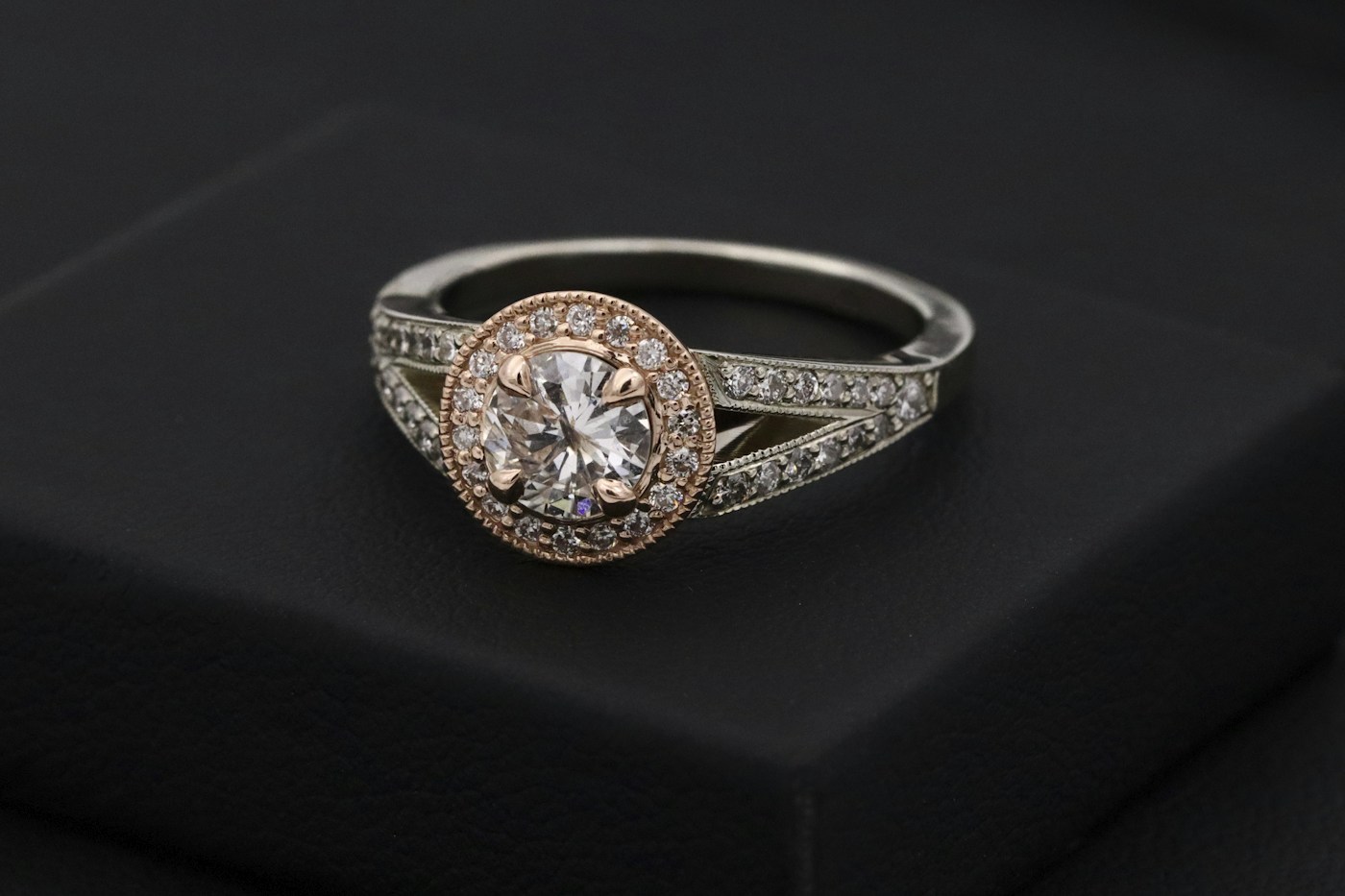
A 1-carat diamond is a popular choice for engagement rings, but carat describes weight,not a fixed physical size. A well-proportioned 1-carat round brilliant diamond is typically about 6.5 millimeters in diameter, or roughly 0.26 inches across. Other diamond shapes with the same weight can look longer, wider, or smaller from the top.
How Big Is a 1-Carat Diamond in Millimeters?
For a standard round brilliant cut, a 1-carat diamond commonly measures around 6.4–6.5 mm across. Its exact dimensions depend on the cut proportions and how the rough stone was shaped. The measurement is a useful reference, not a universal rule for every diamond.
| Round diamond weight | Approximate diameter |
|---|---|
| 0.50 carat | About 5.1–5.2 mm |
| 0.75 carat | About 5.8–5.9 mm |
| 1.00 carat | About 6.4–6.5 mm |
| 1.50 carats | About 7.3–7.4 mm |
| 2.00 carats | About 8.1–8.2 mm |
What Does One Carat Mean?
One metric carat equals 200 milligrams, or 0.2 grams. A carat is divided into 100 points, so a 0.50-carat diamond is sometimes described as 50 points. The Gemological Institute of America (GIA) emphasizes that carat measures weight, not the visible dimensions of a stone.
Why Two 1-Carat Diamonds Can Look Different
Diamond shape
A round, oval, pear, marquise, emerald, and cushion diamond distribute weight differently. Elongated shapes can cover more finger length, while some cuts carry more of their weight in depth. This is why a 1-carat oval may appear larger face-up than a 1-carat round, even though both weigh the same.
Cut proportions
Cut affects how a diamond handles light and how its weight is distributed. A deeper stone may hide more weight below the girdle and look smaller from above. A shallow stone may look wider but can have light-performance trade-offs. Compare the actual length, width, and depth measurements rather than relying on carat alone.
Setting and finger size
A halo setting, thin band, bezel, or solitaire can change the visual impression. The same stone may look more prominent on a smaller finger. Try a similar millimeter size in person if possible.
Does a 1-Carat Diamond Look Big?
A 1-carat round diamond has a noticeable presence on many engagement-ring settings, but appearance is subjective. Ring size, setting design, finger proportions, and personal preference all matter. A well-cut 0.90-carat stone may look very similar to a 1.00-carat stone, while the price difference can be meaningful.
What Affects the Price of a 1-Carat Diamond?
Carat is only one of the 4Cs used to evaluate diamonds:
- Cut: Influences brilliance, fire, and visual performance.
- Color: Measures how colorless a diamond appears on the grading scale.
- Clarity: Describes internal inclusions and surface blemishes.
- Carat: Measures weight, not diameter.
Two diamonds with the same carat weight can have very different prices because of cut quality, color, clarity, shape, grading report, and seller. Compare like-for-like stones and request an independent grading report from a respected gemological laboratory.
How to Visualize a 1-Carat Diamond on a Ring
Numbers in millimeters can be difficult to picture, so compare a 1-carat round diamond with the width of a pencil eraser or the top of a small button. A 6.5 mm stone is noticeable, but it does not cover the entire finger. The setting can make the center stone look more prominent or more understated. A thin band, elevated prongs, or a halo can change the visual balance without changing the diamond’s actual weight.
Round Versus Fancy Shapes at the Same Carat Weight
Carat weight alone does not tell you how much finger coverage a diamond provides. A round brilliant has a roughly circular face-up outline. An oval or marquise shape stretches the weight along the finger, while a pear has a tapered end. Emerald and radiant cuts have different outlines and facet patterns. Cushion diamonds are often squarer or softly rectangular. Compare the listed length and width in millimeters for each individual stone.
Two stones of the same shape and weight can still have different dimensions because of depth and girdle thickness. A diamond that carries more weight below the visible top may look smaller than a shallower stone of the same carat weight. Very shallow proportions are not automatically better, however, because light performance matters too.
Understanding the 4Cs Before You Buy
Cut: the factor that controls sparkle
For round brilliant diamonds, cut grading evaluates proportions, symmetry, and polish in relation to light performance. A well-cut diamond can look lively and bright. A poorly proportioned stone may appear dull or show a dark center even when its color and clarity grades are high. Do not sacrifice cut quality just to reach a particular carat number.
Color: how noticeable is tint?
Diamond color is graded on a scale that runs from colorless to light yellow or brown for the standard GIA scale. Differences can be subtle, especially once a stone is mounted. Metal color also affects the overall look: yellow or rose gold can complement warmer color grades, while white metals may make color differences more noticeable.
Clarity: inclusions and blemishes
Clarity describes internal characteristics and external blemishes. Many inclusions are difficult to see without magnification, but their position, size, and type matter. Ask whether a stone is eye-clean from normal viewing distance rather than assuming a higher clarity grade is always worth the premium.
Carat: weight, not visual diameter
One carat equals 200 milligrams. A stone can weigh one carat and still look different from another one-carat stone because of its cut and shape. The Gemological Institute of America’s explanation of carat weight is a useful reference when comparing listings.
Natural and Lab-Grown 1-Carat Diamonds
Natural and laboratory-grown diamonds have essentially the same crystal structure and optical properties, but they differ in origin. Natural diamonds form in the Earth over geological time, while lab-grown diamonds are produced using controlled processes. Their market prices can differ substantially. Both should be assessed for cut, color, clarity, carat, grading documentation, and the seller’s return policy.
Do not assume that a lab-grown diamond is automatically better or worse; the right choice depends on budget, preference, and the importance you place on origin. Ask for clear disclosure and a grading report that identifies the stone’s origin.
Questions to Ask Before Purchasing
- What are the exact length, width, and depth measurements?
- Who graded the diamond, and can I verify the report number?
- Is the diamond eye-clean under normal lighting?
- Does the price include the setting, tax, and resizing?
- What is the return, exchange, and upgrade policy?
- Is the stone natural or laboratory-grown, and is that stated on the report?
Request photos and video in neutral lighting, but remember that screens can change color and brightness. If possible, inspect the stone in person or buy from a seller with a clear return window.
Budgeting for a 1-Carat Engagement Ring
Set a total budget for the complete ring, not only the center stone. The setting, side stones, metal, labor, taxes, insurance, and future maintenance can all add to the price. Consider whether a 0.90-carat diamond with excellent cut and attractive face-up dimensions would satisfy your preferences at a lower cost. A carat threshold is not a quality grade, and the difference between two nearby weights may be hard to notice once the ring is worn.
For more jewelry-related context, read Worthiums’ guide to what a black wedding ring can symbolize. It discusses ring materials and personal style, while this guide focuses on diamond size and grading.
Frequently Asked Questions
Is a 1-carat diamond 6.5 mm?
A well-proportioned 1-carat round brilliant is often about 6.4–6.5 mm in diameter. Fancy shapes have different length and width measurements.
How many grams is a 1-carat diamond?
One carat equals 0.2 grams, or 200 milligrams.
Does a 1-carat oval look bigger than a 1-carat round?
It often looks longer and may cover more finger area, but the exact appearance depends on its length-to-width ratio and cut proportions.
Is 1 carat a good size for an engagement ring?
It is a common choice, but there is no universally correct size. Choose based on budget, style, comfort, and the diamond’s overall quality.
Conclusion
A 1-carat diamond is a weight category, not a guaranteed measurement. Use approximately 6.5 mm as a reference for a round brilliant, then compare the exact dimensions and grading details of the stone you are considering. The best choice balances appearance, cut quality, and budget,not carat weight alone.

Lois Snyder is a versatile writer with experience across multiple domains. She crafts engaging and informative content, delivering valuable insights and captivating readers with her expertise and passion for diverse topics.