
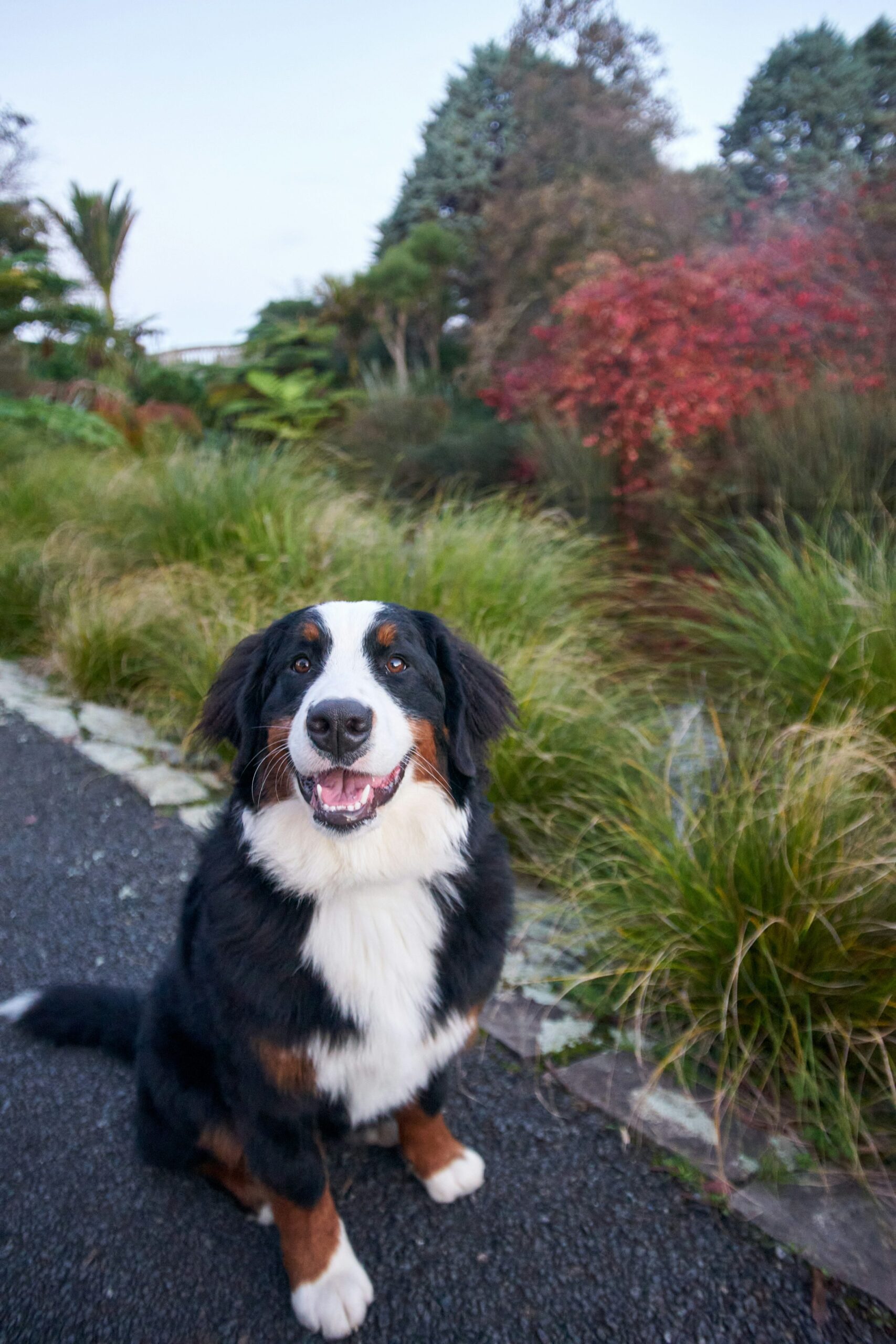
The Bernese Mountain Dog Golden Retriever mix combines two large, people-oriented breeds known for their friendly nature and working heritage. Often called a Golden Mountain Dog, this cross can vary in size, coat, energy, and temperament. Understanding both parent breeds helps prospective owners plan for grooming, training, exercise, and long-term care.
What Is a Bernese Mountain Dog Golden Retriever Mix?
A Bernese Mountain Dog Golden Retriever mix is a cross between a Bernese Mountain Dog and a Golden Retriever. The informal name Golden Mountain Dog is often used by breeders and dog owners, but this cross is not a standardised breed with a single official appearance or temperament standard. Puppies in the same litter can inherit different combinations of coat colour, body shape, energy, and behaviour.
The Bernese Mountain Dog was developed as a Swiss working farm dog, while the Golden Retriever was developed as a Scottish gundog. Both breeds are generally valued for their relationship with people, but they were bred for different jobs. A mix may be calm and affectionate at home yet still need substantial daily activity, structured training, and an opportunity to use its brain.
A photograph of a Bernese parent breed can help show the familiar tri-colour coat, but it should not be mistaken for a picture of every Golden Mountain Dog. Some crosses look more like the Bernese, some have a more Golden-like coat and expression, and others fall between the two. Coat colour alone does not predict personality or health.
How Big Does a Golden Mountain Dog Get?
Expect a large dog, but do not rely on a single advertised weight range. The American Kennel Club lists male Golden Retrievers at about 65 to 75 pounds and females at 55 to 65 pounds. Bernese Mountain Dogs are usually larger, with adult males commonly around 80 to 115 pounds and females around 70 to 95 pounds. A cross may inherit the frame of either parent or fall between them.
Adult height and weight depend on genetics, sex, nutrition, activity, and overall health. A puppy’s paw size is not a precise prediction of adult size. Ask the breeder for the parents’ measured height and weight, the puppy’s growth history, and the approximate adult size of previous litters if that information exists. A rescue dog may have an unknown parentage, so a veterinarian can help assess body condition and growth.
Large dogs need space to move comfortably, but a large garden does not replace daily walks and interaction. Consider whether your home can accommodate a dog that may weigh as much as an adult person. Think about vehicle access, stairs, furniture, travel crates, dog beds, and the cost of larger food portions and veterinary medications.
If children or older adults live in the home, plan for the dog’s adult size and enthusiasm. Even a friendly adolescent can accidentally knock over a small child when excited. Supervise interactions, teach children how to approach dogs calmly, and give the dog a quiet place to rest without being disturbed.
Temperament: Friendly, Loyal, and People-Focused
Both parent breeds are often described as affectionate and sociable, so many mixes enjoy being near their family and participating in everyday activities. A Golden Retriever influence may contribute playfulness, enthusiasm, and a strong interest in retrieving. A Bernese influence may contribute a steady, gentle manner and a close bond with familiar people. These are tendencies, not guarantees for an individual dog.
Temperament is shaped by inherited traits, early experiences, health, training, and the environment. A poorly socialised dog may be fearful or reactive even when its parent breeds are generally friendly. A confident puppy still needs gradual exposure to different people, surfaces, household sounds, vehicles, veterinary handling, and calm dogs. Socialisation should be positive and controlled rather than forcing the puppy into overwhelming situations.
Some dogs become strongly attached to their household and may struggle when left alone for long periods. Build independence gradually by teaching the dog to relax in a safe space, practise short departures, and enjoy appropriate enrichment. Do not leave a young puppy alone for a full working day without a suitable care arrangement. A walker, trusted family member, or dog-care service may be necessary.
A mixed-breed dog may have a prey drive, interest in chasing wildlife, or a tendency to greet strangers enthusiastically. Use a secure lead and fenced outdoor area until recall is reliable. Do not assume that a dog will behave safely around unfamiliar livestock, cats, small pets, or children simply because its breed description says friendly.
Grooming and Shedding
Both parent breeds have dense coats that require regular care. A Golden Mountain Dog may have a medium-to-long double coat with feathering on the chest, legs, and tail. It may shed throughout the year and heavily during seasonal coat changes. Brushing several times a week is a sensible starting point, with more frequent sessions during heavy shedding or when the coat tangles easily.
Use a suitable slicker brush and comb to check behind the ears, under the collar, around the legs, and through the feathering. These areas can develop mats that are difficult to see from the surface. Work gently and stop if the dog becomes uncomfortable. A professional groomer can demonstrate a safe technique and advise whether a particular coat needs a tidy-up.
Bathing should be based on the dog’s condition, not an arbitrary weekly schedule. Use a dog-appropriate shampoo, rinse thoroughly, and dry the coat fully. Trapped moisture in a dense undercoat can contribute to skin irritation. Avoid shaving a double coat as a routine way to manage shedding or heat; ask a veterinarian or experienced groomer before making major coat changes.
Check ears, nails, teeth, and paws as part of the weekly routine. Floppy or feathered ears can trap moisture and debris, so inspect them and ask a veterinarian about redness, odour, discharge, or frequent head shaking. Trim nails before they become long enough to change the dog’s gait. Dental brushing with dog-safe toothpaste supports oral hygiene.
Exercise Needs and Mental Enrichment
A Golden Mountain Dog is likely to need regular activity, but the amount should match the dog’s age, fitness, and joint development. Adult dogs often enjoy brisk walks, sniffing routes, retrieving games, swimming where safe, and low-impact hikes. A dog that receives only a short walk may become bored and invent its own entertainment, such as chewing, digging, or barking.
Do not force a growing puppy to run long distances, jump repeatedly, or exercise on hard surfaces for extended periods. Large breeds can mature slowly, and excessive repetitive impact may place unnecessary stress on developing joints. Ask your veterinarian when it is appropriate to introduce longer hikes, jogging, agility, or other demanding activities.
Mental exercise matters too. Use food puzzles, scent games, short training sessions, and appropriate chew items. Hide-and-seek games and simple retrieval exercises can provide enrichment without requiring constant high-impact movement. Rotate toys to keep them interesting, but supervise toys that can break into small pieces or be swallowed.
In hot weather, schedule walks for cooler parts of the day, provide shade and water, and watch for heavy panting, weakness, drooling, confusion, or collapse. A thick coat does not protect a dog from heat stress. Avoid leaving the dog in a parked vehicle, even for a short time. In warm climates, indoor enrichment and shaded activity may be safer than strenuous midday exercise.
Training a Large, Strong Companion
Start training as soon as the puppy arrives. Teach its name, recall, loose-leash walking, settling on a mat, polite greetings, and handling for grooming and veterinary care. Use reward-based training with small treats, praise, toys, and short sessions. A dog that will become large should learn not to jump on people or pull on the lead while it is still physically manageable.
Consistency is essential. All family members should use the same cue words and rules. If jumping is allowed sometimes, the dog may continue to try it when guests arrive. Reward four paws on the floor, calm greetings, and voluntary attention. Do not rely on shouting, leash corrections, or intimidation; these methods can create anxiety and damage trust.
Teach the dog to accept brushing, nail handling, ear checks, tooth brushing, and being examined. Pair each step with treats and stop before the dog becomes overwhelmed. Early handling practice is especially useful for a large dog because lifting, restraint, and grooming become harder when the animal is fully grown.
A well-run puppy class can provide structured social learning and help owners practise basic cues with guidance. Choose a class that uses humane methods and requires appropriate vaccinations and health checks. If the dog shows persistent fear, growling, guarding, or reactivity, consult a qualified positive-reinforcement trainer or veterinary behaviour professional rather than waiting for the behaviour to disappear.
Health Considerations and Responsible Breeding
A mixed-breed dog can inherit health risks from either parent. Large breeds may be affected by hip or elbow dysplasia, certain heart conditions, eye disorders, and other inherited or age-related diseases. Bernese Mountain Dogs also have breed-specific concerns, including an increased risk of some cancers. No cross guarantees protection from a health problem simply because two breeds are combined.
Ask for health-screening documentation for both parents, not just a verbal assurance that they are healthy. The Golden Retriever Club of America recommends screening breeding dogs for hips, elbows, eyes, heart conditions, and certain inherited diseases. The AKC working-group health testing requirements also outline recommended health evaluations for Bernese Mountain Dogs.
A responsible breeder should explain the health history of both lines, show relevant test results, discuss the temperaments of the parents, and answer questions about veterinary care and early socialisation. Be cautious if a seller will not let you meet the mother, refuses to share records, pressures you to pay quickly, or claims that a crossbreed cannot develop inherited conditions.
The AKC’s Golden Retriever breed profile describes the parent breed’s activity, grooming, and recommended health tests. Use official breed information as a starting point, not as a prediction for an individual mix. A veterinarian can help set an appropriate preventive-care plan based on the dog’s actual body condition, history, and risk factors.
Feeding and Maintaining a Healthy Weight
Feed a complete and balanced diet appropriate for the dog’s life stage and size. Large-breed puppy food is often recommended for controlled growth, but the correct product and feeding amount should be chosen with veterinary guidance. Rapid growth and excess body weight can place additional stress on joints. Follow the feeding guide as a starting point and adjust based on body condition, activity, and veterinary advice.
Avoid free-feeding if it makes portions difficult to monitor. Measure daily food, account for training treats, and use part of the meal for enrichment. Keep fresh water available and avoid vigorous exercise around large meals if your veterinarian advises caution because deep-chested large dogs may be at risk for gastric dilatation-volvulus (bloat). Know the warning signs and seek emergency care if you suspect bloat.
A healthy dog should have a visible waist when viewed from above and a gentle abdominal tuck from the side, while the ribs should be easy to feel without being sharply visible. Coat thickness can hide weight changes, so feel the body and weigh the dog regularly. Your veterinarian can show you how to assess body condition and set a suitable target.
Is This Mix Right for Your Household?
This cross may suit an active household that wants a social companion and is prepared for regular grooming, training, exercise, and veterinary expenses. It may be less suitable for someone who wants a low-shedding dog, cannot manage a large animal, or expects a puppy to entertain itself for long periods. Consider the adult dog you are likely to have, not only the adorable puppy.
If you are comparing the mix with a purebred Golden Retriever, our guide to Golden Retriever ownership costs can help you think through the wider financial commitment of food, veterinary care, training, grooming, and supplies. The exact expenses for a crossbreed may differ by size, health, location, and the services you use.
Before adopting, ask about the dog’s current routine, behaviour around children and other animals, response to grooming, and any known health concerns. For a rescue, a foster caregiver may be able to describe how the dog behaves in a home. Arrange a veterinary check after adoption and make sure identification, vaccination, parasite prevention, and future care are in place.
For other pet-care, family, and ownership topics, browse the Worthiums Lifestyle section. It is useful for broader household planning, but breed-specific health decisions should always be discussed with a veterinarian.
Conclusion
The Bernese Mountain Dog Golden Retriever mix can be a loving, active, large companion, but appearance and temperament are not guaranteed. Plan for shedding, consistent training, daily activity, heat management, and possible inherited health risks from either parent. Choose a responsible breeder or rescue, review health information, and work with a veterinarian to tailor care to the individual dog.

Lois Snyder is a versatile writer with experience across multiple domains. She crafts engaging and informative content, delivering valuable insights and captivating readers with her expertise and passion for diverse topics.