
Introduction
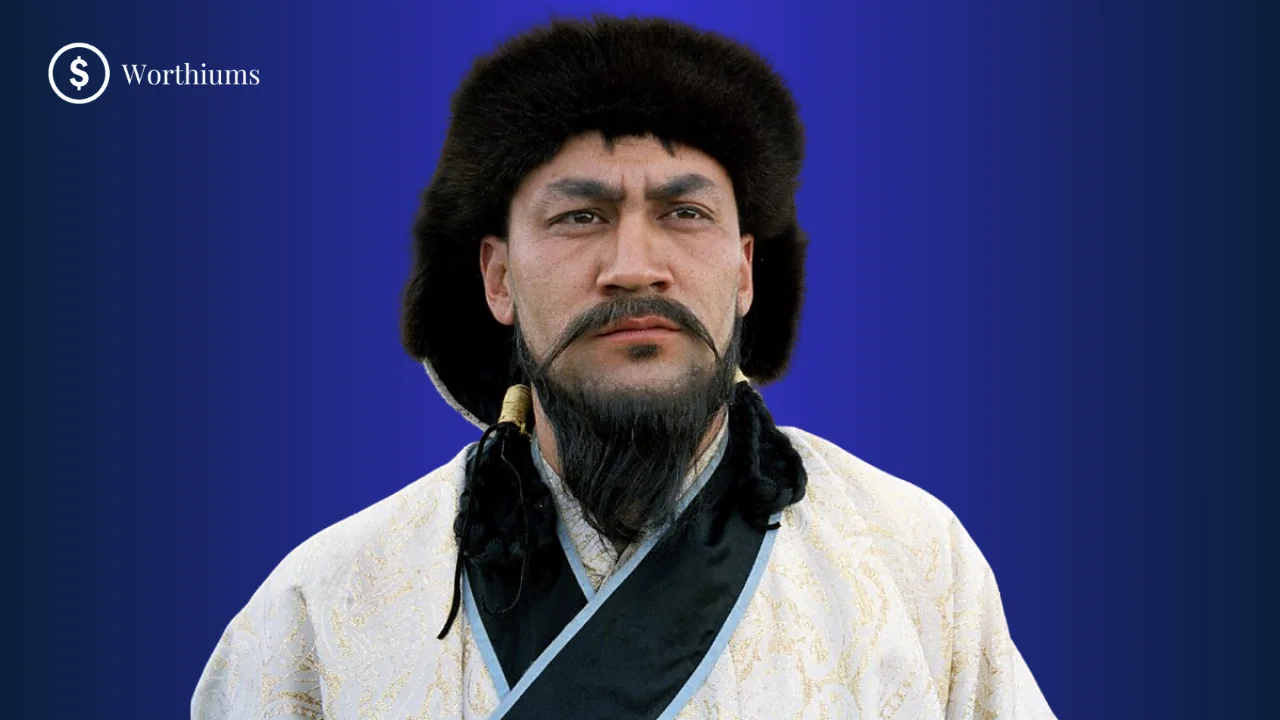
Genghis Khan (born Temüjin around 1162 – died August 1227) was a Mongol warrior‑ruler and the founder of the Mongol Empire, which grew into the largest contiguous land empire in world history. From humble beginnings on the harsh Mongolian steppe, he united warring tribes, built a powerful military force, and reshaped Eurasian geopolitics through sweeping conquests. His influence stretches from cultural identity in modern Mongolia to global history books that explore both his brilliance and the brutality of his campaigns.
Who Is Genghis Khan?
Born into the Borjigin clan, Temüjin endured hardship early in his life, including losing his father and being abandoned by his tribe. Through strategic alliances, physical courage, and proven leadership, he built a dedicated following and steadily gained power. In 1206, Mongol chieftains proclaimed him Genghis Khan, meaning “Universal Ruler,” marking the official start of his transformation from a tribal leader to the architect of a massive empire that stretched from Asia into Europe.
How Genghis Khan Went Viral (Historical Fame)?
Long before social media, stories about Genghis Khan spread quickly across the known world through merchants, envoys, and enemy reports. His name became synonymous with unstoppable conquest as Mongol armies struck fear into distant lands. Accounts by foreign chroniclers and trade routes like the Silk Road carried tales of his ruthlessness and military success, helping define his legend in history books, films, and historical narratives that continue to this day.
Also Read: Pilar Sanders Net Worth
What Genghis Khan Is Doing Now?
Genghis Khan is not alive today; he died during a military campaign against the Western Xia in 1227. The exact location of his burial remains one of history’s great mysteries, as his tomb has never been definitively found. Although he passed away nearly 800 years ago, his legacy lives on through cultural memory, scholarship, and the national identity of Mongolia.
Where Does Genghis Khan Live Now?
Although his physical remains have never been discovered, Genghis Khan “lives” through monuments, literature, and global historical studies. Mongolia honors him as the founding father of the nation, and researchers and historians around the world continue to explore his life, military strategies, and lasting impact on the modern world.
Genghis Khan Net Worth
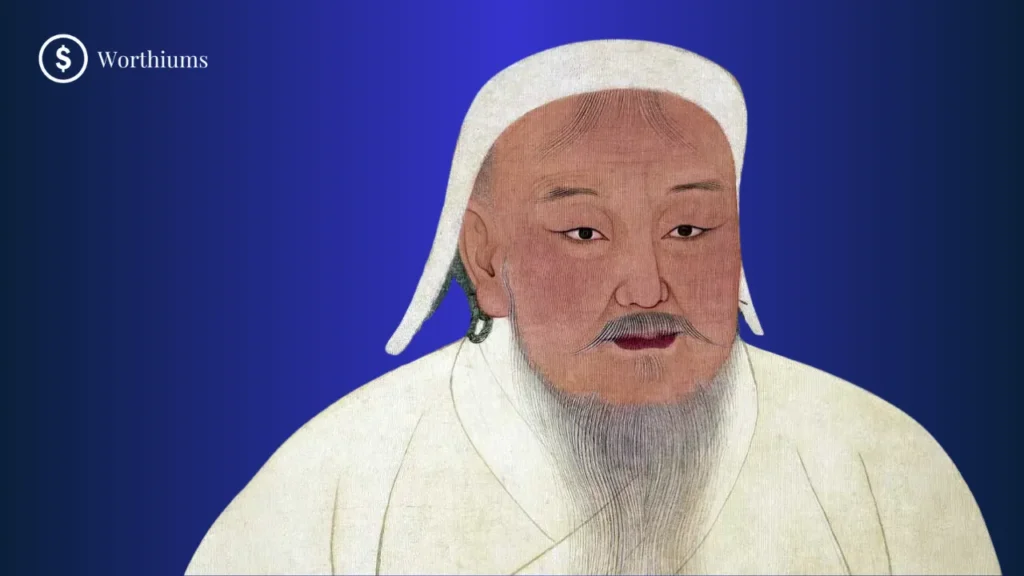
Determining Genghis Khan net worth is not straightforward because the classical idea of personal wealth did not exist during his time. Medieval rulers did not keep private bank accounts or investment portfolios. Instead, wealth was tied to land control, tributes, and military spoils. Modern attempts to calculate Genghis Khan’s net worth often result in astronomical figures like $120 trillion to $150 trillion in today’s terms, based on the combined value of territories and resources he controlled at the height of the Mongol Empire. However, these figures are highly speculative and should not be interpreted as personal wealth in the way modern net worth is understood.
Also Read: Victor Davis Hanson Net Worth
Financial Growth Timeline
Genghis Khan’s rise shows how he expanded control rather than accumulated a personal fortune. Around 1162 he was born into a struggling family, and during the 1180s to 1200s, he built alliances and began consolidating power. In 1206, his unification of Mongol tribes translated to control over economic systems and resources. By the 1210s, his conquest of northern China brought increased spoils and tribute systems. During the 1220s, his campaigns in Central Asia further expanded the wealth base of the empire. He died in 1227, and his empire passed to his sons and grandsons. These changes reflect influence and empire growth more than direct accumulation of personal assets.
Key Earning Streams
As a ruler in the 13th century, Genghis Khan’s “wealth” came from sources tied to empire power. He gained extensive plunder and tributes from conquered cities and kingdoms, controlled key segments of the Silk Road trade routes, imposed taxation systems on subject populations, and managed vast herds and human labor under Mongol administration. These revenue streams supported his military campaigns, state apparatus, and broader economic influence, but they were not “earnings” in the modern sense of personal income.
Comparison With Peers
| Historical Figure | Modern Equivalent Net Worth (Speculative) | Notes |
| Genghis Khan | ~$120 trillion to $150 trillion | Based on empire control |
| Mansa Musa | ~$400 billion | Often cited as richest historical king |
| Augustus Caesar | ~$4.6 trillion | Based on empire economic control |
| Modern Billionaires | ~$250 billion | Verified personal assets |
These speculative figures help illustrate how historians and modern wealth trackers attempt to compare different eras, but none represent officially verified personal wealth.
Career Highlights
Genghis Khan is best known for uniting the Mongol tribes into a centralized empire, building one of history’s most efficient military forces, and leading successful campaigns across China, Central Asia, and Eastern Europe. He established legal reforms called Yasa, improved communication systems across his empire, and promoted trade that helped link East and West. These achievements transformed the Mongol people from scattered nomadic clans into a dominant world power.
Also Read: Juan Ibarra Net Worth
Philanthropy
Formal philanthropy as known today did not exist in Genghis Khan’s era. Still, his leadership redistributed wealth and rewards among loyal followers and troops, integrated conquered peoples into his empire, and supported the development of communication networks and trade routes that benefited many regions. These actions reflected a style of governance and economic integration rather than personal charitable initiatives.
Also Read: Marysol Patton Net Worth
Biography
| Attribute | Details |
| Birth Name | Temüjin |
| Born | c. 1162 |
| Birthplace | Near Lake Baikal, Mongolia |
| Died | August 18, 1227 |
| Age at Death | ~65 years |
| Father | Yesügei |
| Mother | Hö’elün |
| Spouse | Börte and others |
| Children | Jochi, Chagatai, Ögedei, Tolui & others |
| Nationality | Mongol |
| Occupation | Conqueror, Mongol ruler |
These personal details remind us that Genghis Khan was a real historical figure, not a mythic character, and his life shaped world history.
Age
Genghis Khan was approximately 65 years old when he died during a military campaign in 1227. His age at death reflects the remarkable endurance and activity of a leader who spent much of his life on horseback and in battle.
Also Read: Trey Anastasio Net Worth
Height
There are no reliable historical records that document Genghis Khan’s height. Most claims about his physical stature are speculative, as contemporary descriptions focused on his leadership rather than precise measurements. Historians generally avoid assigning a definitive height due to lack of evidence.
Family & Relationship
Genghis Khan married several women to form strategic alliances and strengthen his political influence. His primary wife was Börte, and he had multiple children who played key roles in continuing his legacy. His sons, particularly Ögedei and Tolui, inherited portions of the empire and expanded it further after his death. Family ties were central to his governance and succession plans.
Education
Unlike modern schooling systems, Genghis Khan did not receive formal education. His learning came from real‑world experience, tribal mentorship, and battlefield strategy. He developed leadership skills through alliance building, military campaigns, and the challenges of uniting diverse nomadic tribes into a cohesive political force.
FAQs
What was Genghis Khan’s net worth in modern terms?
Modern estimates put his theoretical Genghis Khan net worth up to $120 trillion to $150 trillion by empire land and resource value, but these figures are speculative and not verified.
Why can’t we know his exact net worth?
Medieval rulers did not keep personal financial records or private wealth accounts, making exact net worth impossible to calculate.
Did Genghis Khan own treasure and gold?
He likely acquired spoils of war and valuable resources but did not store them as personal wealth the way modern individuals do.
Was Genghis Khan richer than modern billionaires?
By speculative empire‑value calculations, his theoretical wealth far exceeds modern billionaires, but this is not personal wealth like stock or cash.
Did his descendants inherit his wealth?
His empire was divided among his sons and heirs, and they controlled different regions and tribute systems after his death.
Also Read: Johnny Cash Net Worth
Conclusion
Genghis Khan net worth, when viewed through the lens of modern terminology, becomes a fascinating yet complex idea. Because he lived in a time without personal financial records, wealth was tied to control of lands, peoples, and economic systems rather than bank accounts or investments. While some modern sources attempt to translate his power into trillions of dollars, these figures represent the value of his vast empire, not his personal treasure. His legacy remains one of the most studied and debated chapters in global history, with enduring influence felt across cultures and centuries.

Avis Casey is a versatile writer with expertise across diverse topics, delivering clear, engaging, and well-researched content. With a strong command of language, Avis crafts insightful articles tailored to inform, inspire, and educate readers.